A documentary in production · LS3 Studios

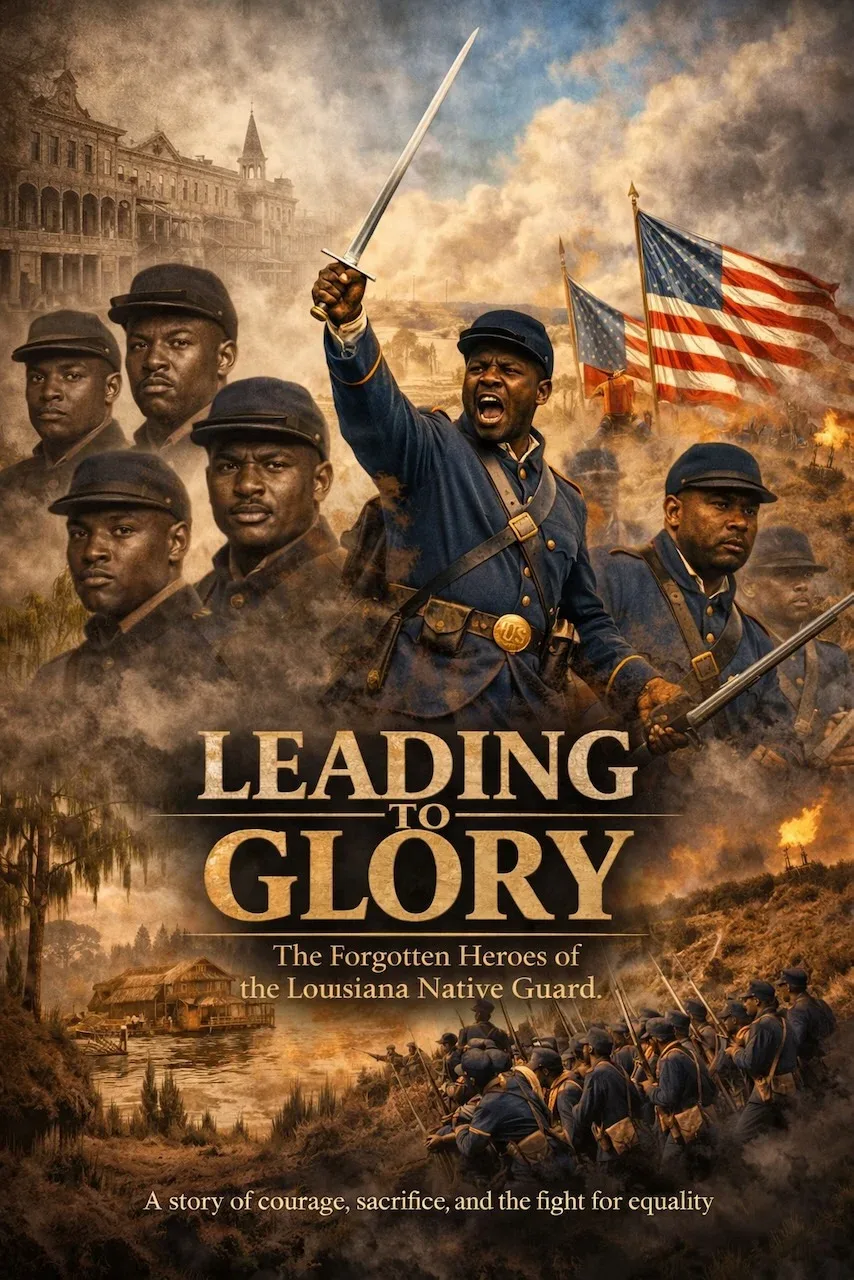
Five men. One uniform. A nation not yet ready.

Nearly 200,000 African Americans served the Union in the Civil War. Leading to Glory recovers five of them — Louisiana Native Guard soldiers whose stories survive in pension files, muster rolls and testimony.

Meet the Five
Format
Feature documentary
Setting
Louisiana, 1862–1907
Regiments
1st, 2nd, 3rd & 4th Native Guard
Status
Seeking finishing funds
200,000

African Americans who served in the Union Army and Navy — most of them remembered only as a number.

Beyond Glory

The 54th Massachusetts got a Hollywood film. Louisiana's soldiers got a file drawer.

For many viewers, the 1989 film Glory is still the only picture of Black military service in the Civil War. Yet the Louisiana Native Guard regiments were organized in 1862 and 1863, and charged the Confederate works at Port Hudson on May 27, 1863.

This film follows five of those men — before, during and after the war — using the paper trail they and their families left behind.

The Roster

Five men, five records.

Select a name to open his file. Each document shown is from the project's own research archive.

File 01

André Cailloux

Captain, Company E · 1st Louisiana Native Guard

Captain of Company E, Cailloux was one of the first Black officers in a Union regiment. He was killed leading his men against the Confederate works at Port Hudson on May 27, 1863 (American Battlefield Trust).

His public funeral in New Orleans on July 29, 1863 drew thousands. Eight years later, his widow Félicie went to court for her pension.

Widow's pension declaration, Félicie Cailloux, October 2, 1871.
Act
II — Service & Sacrifice
Key date
May 27, 1863 · First assault on Port Hudson
Record
Widow's pension file
The Record

From muster to pension.

The documented milestones the film is built around.

The Native Guard joins the Union

General Orders No. 63 (Aug. 22) authorizes the 1st Louisiana Native Guard. The 2nd and 3rd follow that fall, and the 4th in February 1863.

Port Hudson

On May 27 the 1st and 3rd regiments assault the Confederate works. Cailloux is killed. The 4th serves in the siege.

A hero's funeral

Thousands fill New Orleans streets for Cailloux on July 29. Pinchback resigns that year.

New names

The regiments, renamed Corps d'Afrique in 1863, become the 73rd, 74th, 75th and 76th U.S. Colored Infantry.

Governor Pinchback

Pinchback becomes acting governor on Dec. 9, serving into January 1873.

The paper trail

Widows, veterans and neighbors file the pension records that make this film possible.

Sources: American Battlefield Trust · U.S. Army Center of Military History · National Park Service · U.S. Senate Historical Office · Louisiana Secretary of State

The Structure

A life told in three acts.

I

Plantation & City

Before the war

Lafourche Parish and the free people of color of New Orleans — the world each man was born into, and the one he chose to leave.

II

Service & Sacrifice

During the war

Muster into Federal service, the assault at Port Hudson, and soldiers fighting for a Union that did not yet see them as equal citizens.

III

Legacy & Record

After the war

Land, politics and philanthropy — and the pensions and testimony that let these stories be told today.

The Evidence

Built from the record, not the myth.

  1. Primary sources firstPension files, successions, mortgages and muster rolls.
  2. Cross-checkedEvery claim is checked against published military history before it reaches the script.
  3. Gaps stay visibleWhere the record is silent or illegible, the film says so on camera.
Behind the Camera

Making the film.

  1. i.

    On location at Port Hudson & Vicksburg

    Drone and HD cinematography of the sites today, paired with historical photographs.

  2. ii.

    Historian interviews

    Commentary from Civil War historians, including Dr. Anthony J. Cade II.

  3. iii.

    The traveling mural

    A movable mural of key moments travels with the film to festivals and schools, then goes to a permanent home.

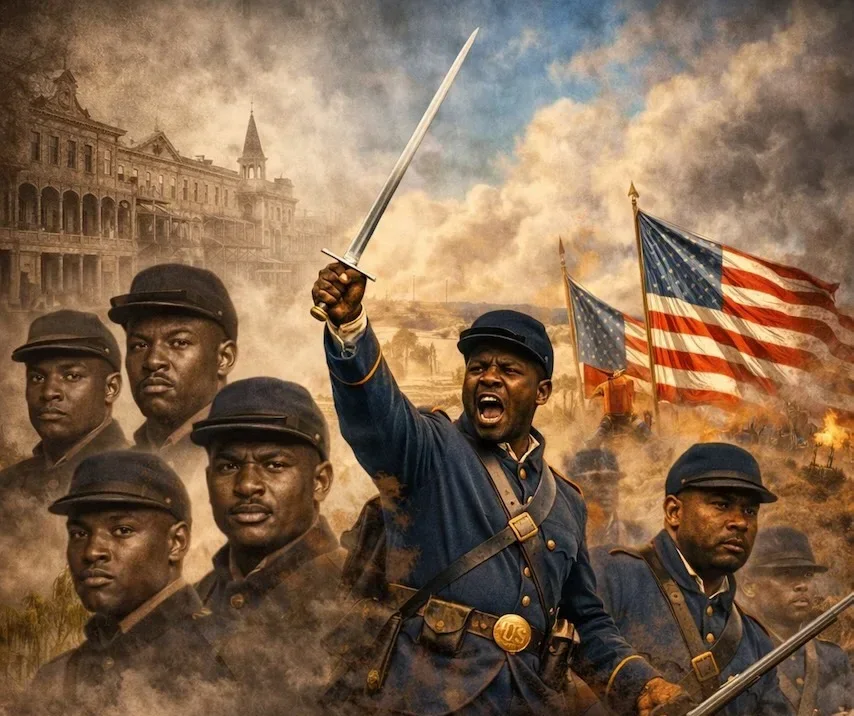
Leading to Glory official poster: Native Guard soldiers in Union blue beneath an American flag Official poster
Leonard Smith III

Leonard Smith III

Director · Producer · Editor

Story strategist and documentarian with over forty years across genealogy, photography and film. Director/producer of the award-winning A Place Called Desire and The Gulfside Assembly Story.

Tod A. Smith

Tod A. Smith

Writer · Producer

Emmy, Telly and Communicator Award-winning writer and photographer with over 30 years of content-creation experience.

Larry Everage Jr.

Larry Everage Jr.

Director of Photography · Producer

Videographer, photographer and documentarian capturing Black culture and traditions. Honors include Telly Awards, NOLA Millennial and Dillard University 40 Under 40.

Screenings & Education

Bring the film to your community.

Leading to Glory is built for festivals, classrooms, museums and public television.

Schools & universities

Screening plus a discussion on reading pension and military records.

Museums & heritage sites

Film with the traveling mural as a short-term exhibit.

Festivals & broadcasters

Screener links and press kit on request.

Request a screening

Your email program should now open with your request filled in. Press send to deliver it. If nothing opened, email us at info@ls3studios.com.

Sends from your own email program to info@ls3studios.com. See our Privacy Policy for how screening requests are handled.

Get Involved

These stories are being lost. Help us finish telling them.

Leading to Glory is an independent production seeking finishing funds, archival access and distribution partners for festivals, schools and public television.

Donate via PayPal

Opens your email program to send your sign-up to info@ls3studios.com. Privacy Policy